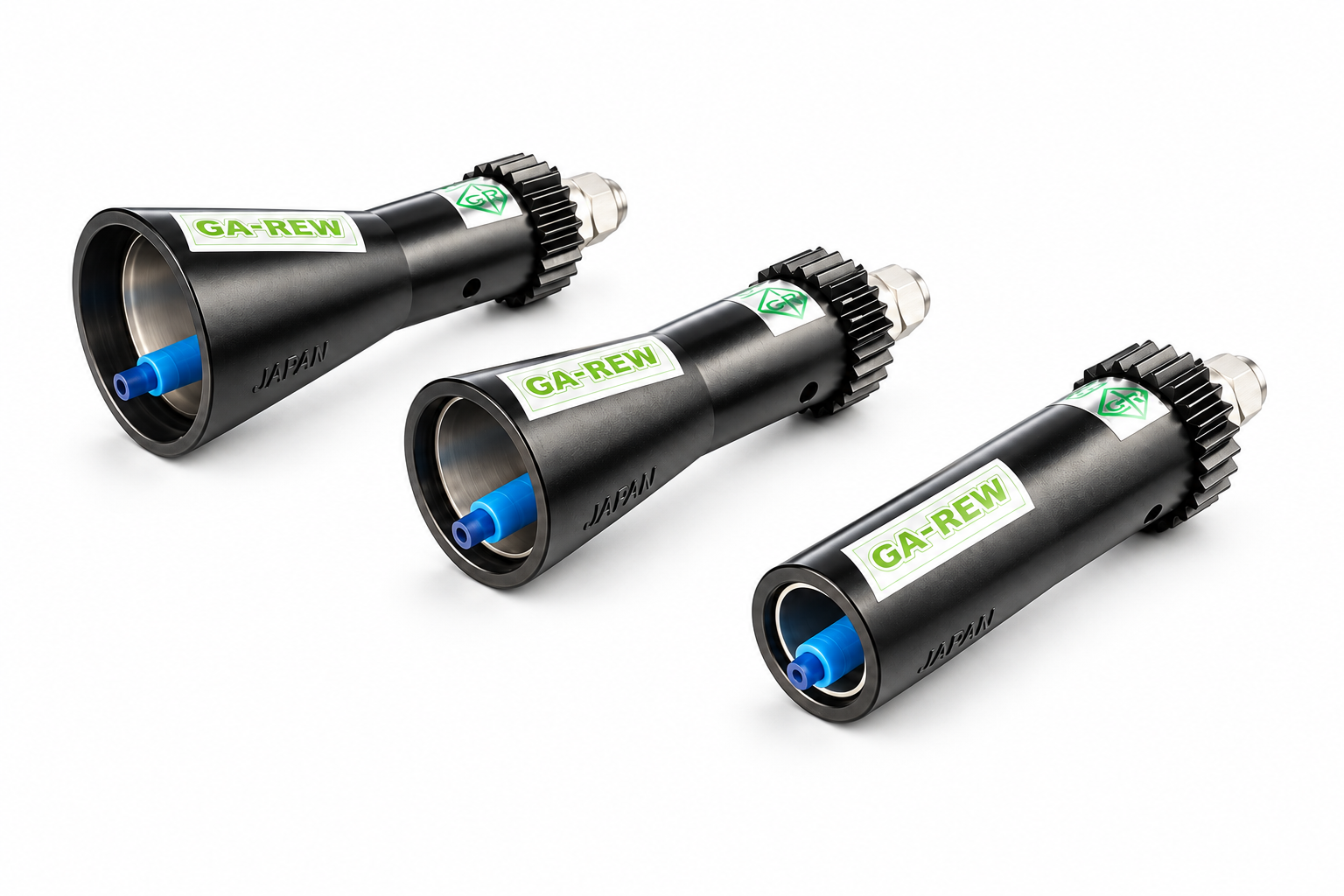
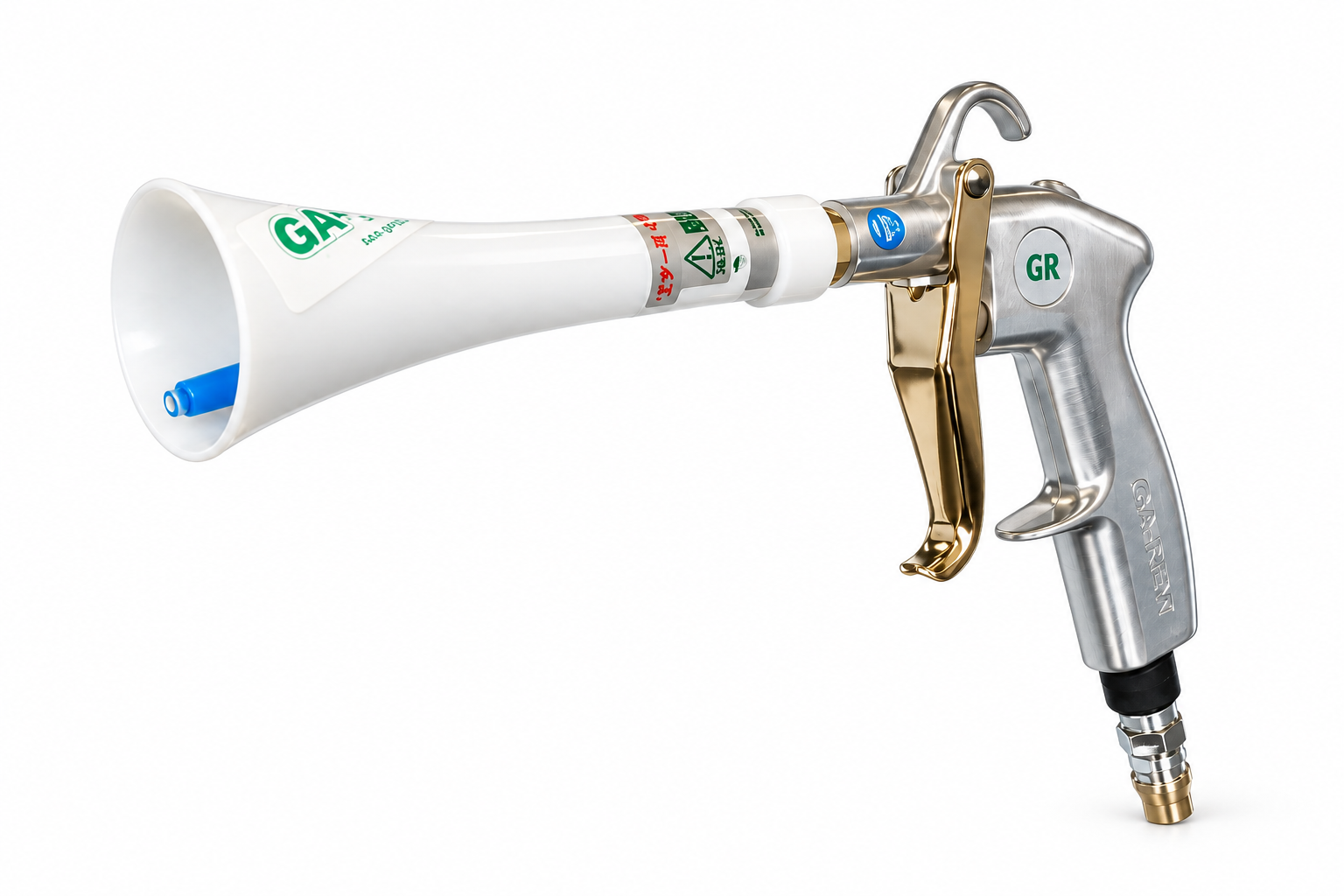
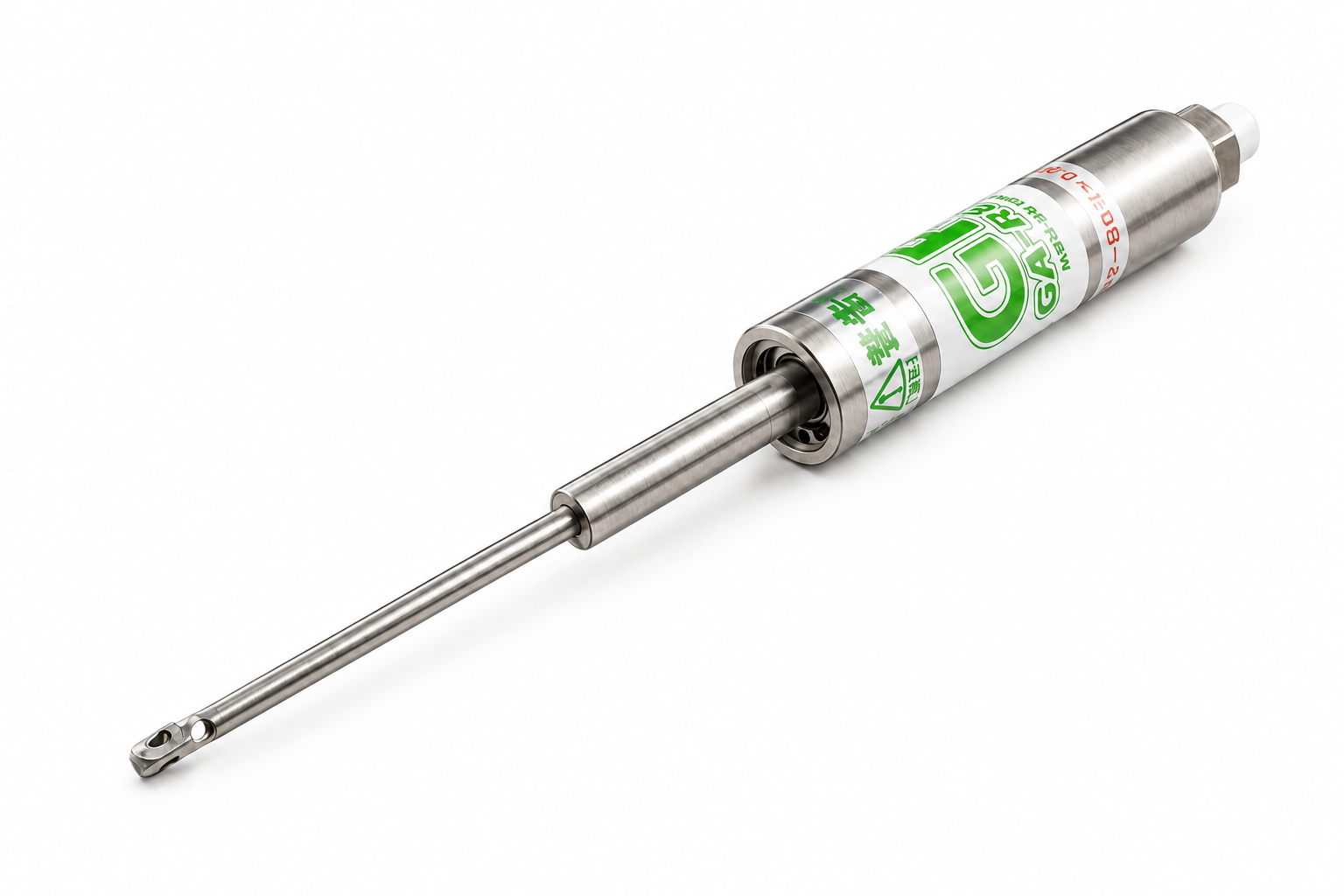
GA-REW nozzles, including the Mechanical Swing Nozzle and Line Blaster, use jet reaction to oscillate or rotate. Explore their use in water removal, dust removal and cleaning through tests against fixed nozzles.
Intermittent systems open and close a valve. GA-REW nozzles oscillate or rotate so that the jet repeatedly passes over the workpiece.
Intermittent pulsed air + fixed nozzle
A valve switches the air supply on and off
Air on →Air off →Air on
A valve switches the air supply on and off to produce intermittent jets from a fixed nozzle. Coverage depends on the nozzle geometry.
Approach to reducing air use
Air use is reduced by introducing periods when the jet is off.
GA-REW oscillating and rotating nozzles
Nozzle motion moves the point of impact
Jet passes →Moves away →Passes again
Air flows continuously while the nozzle moves. Force is applied each time the jet passes over the same location on the workpiece.
Approach to reducing air use
Increasing the area covered by one nozzle may reduce the number of nozzles and total air use. Results depend on the application.
Comparison table and references +
Aspect
Intermittent pulsed air + fixed nozzle
GA-REW oscillating / rotating nozzle
How repeated impacts are produced
A valve starts and stops the air supply
The moving jet repeatedly passes over the same location
Coverage
The discharge pattern of the selected nozzle
The area swept by the oscillating or rotating jet
Adjustable conditions
On/off duration, nozzle, pressure and piping
Nozzle model, pressure, distance and mounting position
What to check when selecting a system
Cycle time, including off periods, and the resulting finish
Flow rate and nozzle count needed for the required coverage
GA-REW uses “pulse” to describe the periodic impact of air on the workpiece as the nozzle moves. The air supply itself is not periodically switched off.
Some intermittent systems also operate entirely on compressed air, without electrical control. Compare cycle time and total air use at the same required finish when choosing a system.
The Mechanical Swing Nozzle directs air across a width as it oscillates. Where one unit can replace several fixed nozzles, nozzle count and air use can be reduced.
B / Rotating nozzle
A rotating tube produces a ring-shaped path
As the tube rotates, the jet repeatedly sweeps a ring-shaped area. This principle is used for air cleaning and for cleaning with added liquid.
The oscillating nozzle was evaluated for air consumption and coverage width. The rotating nozzle was evaluated using pressure-sensitive film and cleaned-area measurements.
Comparison baseline: fixed nozzles with continuous airflow
Values and images apply to the conditions in each report. These tests did not directly compare the nozzles with intermittent pulsed-air systems.
AOscillating / Mechanical Swing Nozzle
Compared with the tested wide-pattern nozzle: approximately 72% less air
Flow comparison: one nozzle of each type
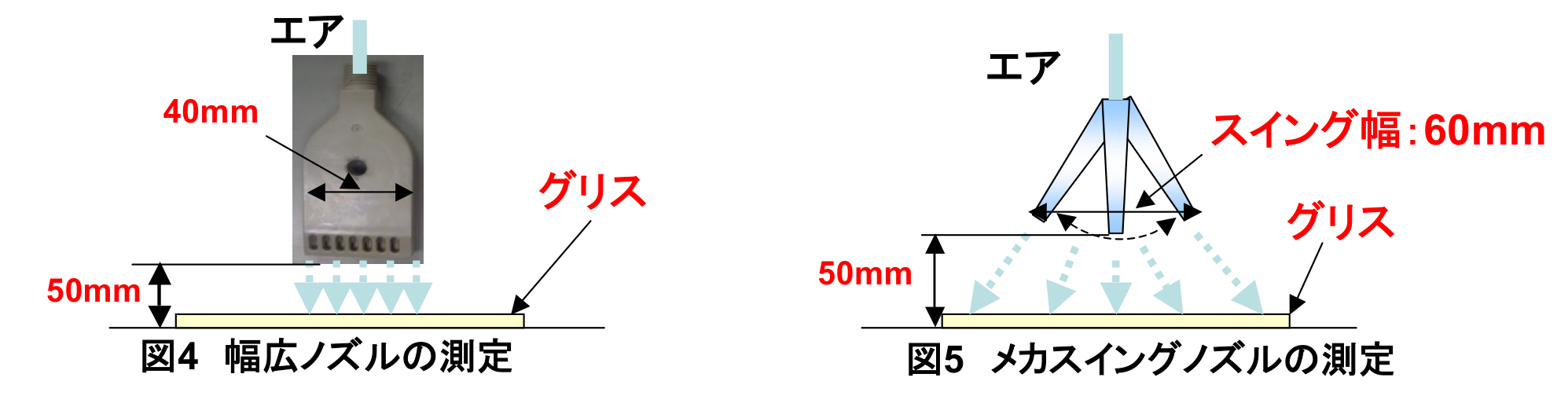
Flow rates of the MS-70 Mechanical Swing Nozzle and the reference fixed wide-pattern nozzle were measured at the same supply pressure.
The Mechanical Swing Nozzle used approximately 28% of the reference nozzle’s airflow. Use the controls above to compare one or three reference nozzles with one MS-70.
Savings refer only to the reference wide-pattern nozzle in this report. Confirm that the required finish can be achieved in your process before replacing a nozzle.
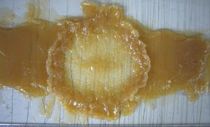
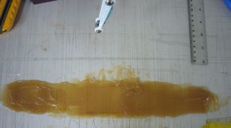
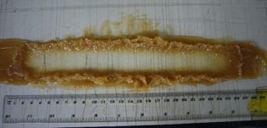
Photographs: energy-saving report, p. 8. The exposure time for these photographs is not specified. The 62 mm and 200 mm values are separate measurements on p. 10. These are trace widths on grease, not guaranteed water-removal widths.
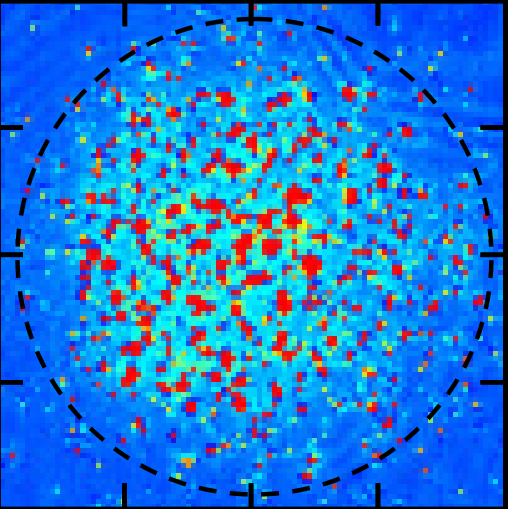
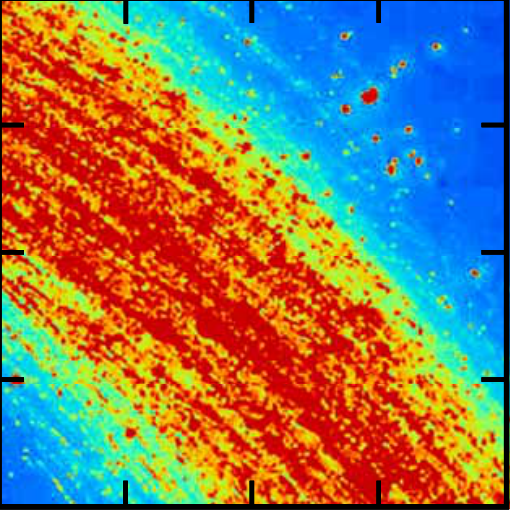
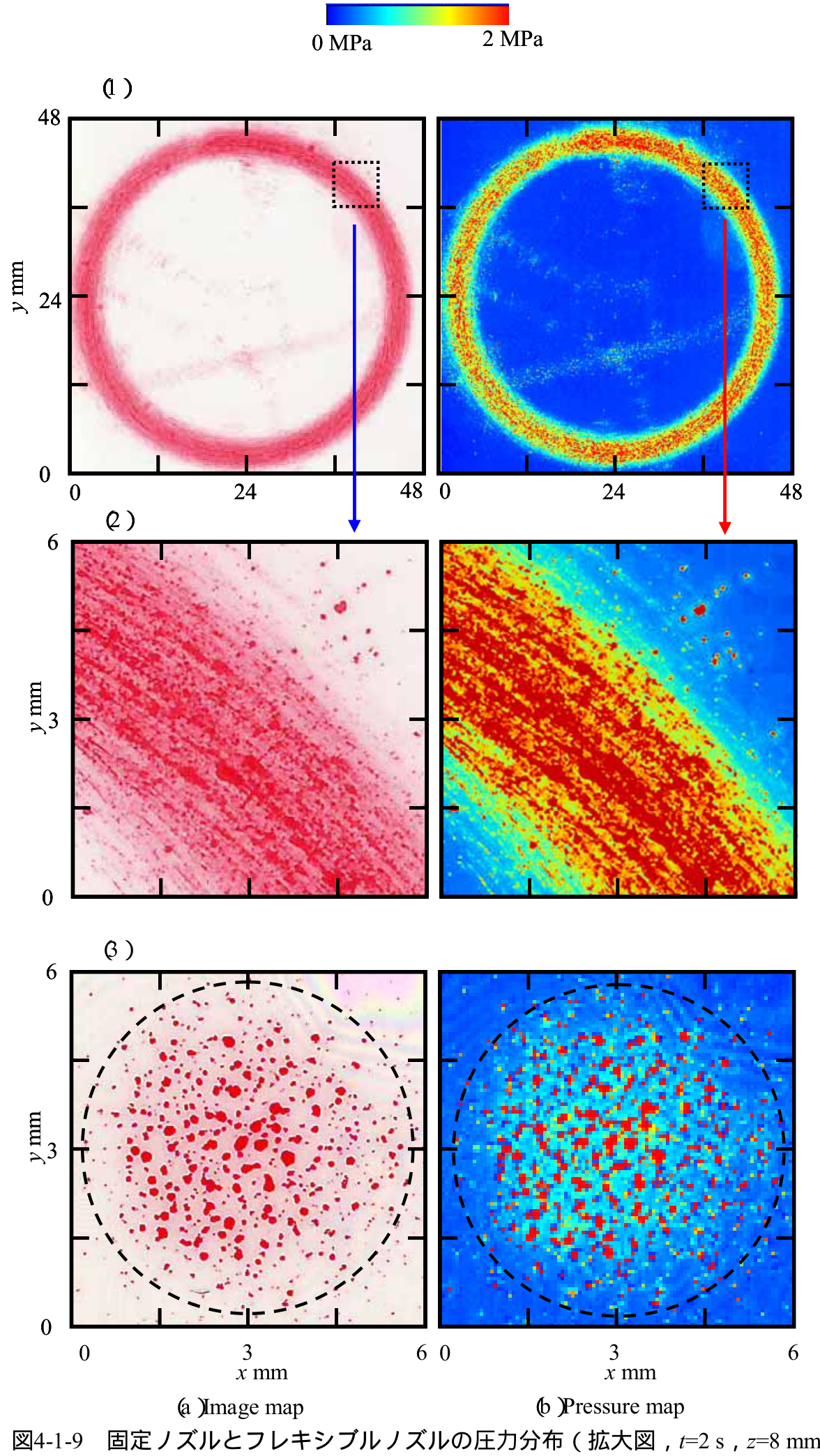
A 6 mm × 6 mm area from each measurement image is displayed at the same size.
Compared: fixed nozzle with continuous airflow / rotating nozzle
Colours closer to red indicate a stronger film response
Blue: 0 MPa Red: 2 MPa
Pressure-sensitive film changes colour when force is applied. These colours correspond to the converted pressure values shown in the report.
Shared test conditions: 2 seconds / 8 mm from the nozzle
Fixed Continuous airflow
Discrete spots
Fixed nozzle, continuous airflow
← 6 mm →
6 mm
Red and yellow areas appear as separate spots.
Rotating
Streak-like patterns
Rotating nozzle, continuous airflow
← 6 mm →
6 mm
Red and yellow areas form connected streaks.
Interpretation in the research report
The influence of shear force
The rotating nozzle produced extensive streak-like patterns. The report attributes this response to shear force acting along the surface in addition to jet pressure.
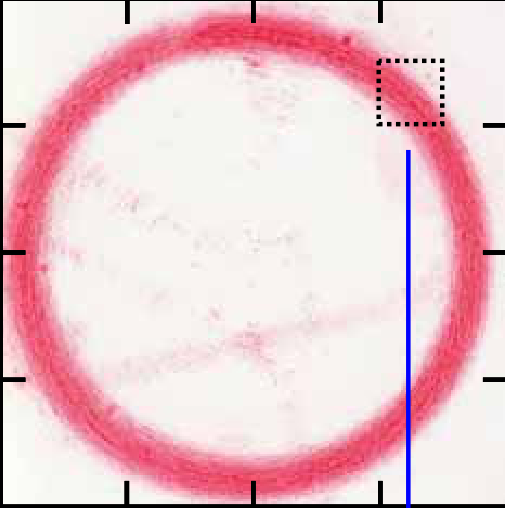
Rotating nozzle overview: 48 mm × 48 mm
Where the enlarged image was taken
The rotating-nozzle image enlarges part of the ring-shaped trace; the fixed-nozzle image enlarges the concentrated jet region. The rotating image does not represent the whole area inside the ring.
The maps include converted values beyond the film’s specified range. Shear also affects colour development, so the colours cannot be converted into a ratio of jet pressure or cleaning power.
Measurement method, original figure and limitations +
Panels (2) and (3) of Fig. 4-1-9 are displayed at the same size. Colours and contrast have not been adjusted. The source images have different resolutions.
Converted values extend beyond the film’s specified range, and shear may contribute to colour development. Do not interpret colour differences as a multiplier of pressure or cleaning power. These results are not a performance guarantee for every current product.
University research compared the area from which contamination was removed with the nozzle fixed and with it rotating.
Compared: stationary nozzle / rotating nozzle
Dark areas show where contamination was removed
Fixed nozzle (continuous airflow) 65 mm × 65 mmRotating nozzle 65 mm × 65 mm
Source: “Cleaning Characteristics of Nozzle Jets” (2007), p. 11. Photographs are reproduced unchanged. The darker areas indicate removal of metallic soap from the surface.
Area from which contamination was removed
Adhered contamination (metallic soap)
Approx. 30 ×
Cleaned area 15 → 486 mm²
Water-soluble contamination (ink)
Approx. 10 ×
Cleaned area 13 → 118 mm²
These ratios compare cleaned areas in the individual tests. They are not multipliers of cleaning power.
Approximately 30× and 10× refer to cleaned area, not cleaning power. Local cleanliness was similar with the fixed nozzle, or better under some conditions.
Pressure fluctuations and liquid droplets +
Approximately 60 pressure cycles per second
In the FY2005 test, pressure fluctuated at approximately 60 Hz as the rotating jet passed the measurement point. This was a result for the apparatus tested at that time.
Cleaning with air and liquid droplets
In the 2007 tests, a jet containing liquid droplets cleaned more effectively than air alone. Mist cleaning may be considered where the process permits water.
Test conditions and scope +
The approximately 30× result concerns metallic soap on sandpaper; the approximately 10× result concerns ink on cloth. Local cleanliness was similar with the fixed nozzle, or better in some conditions.
The rotating-jet research used equipment from 2005–2007. Approximately 60 Hz was measured with the SPT-5T apparatus in FY2005. It is not a common specification for current Line Blaster or Shock Gun models.
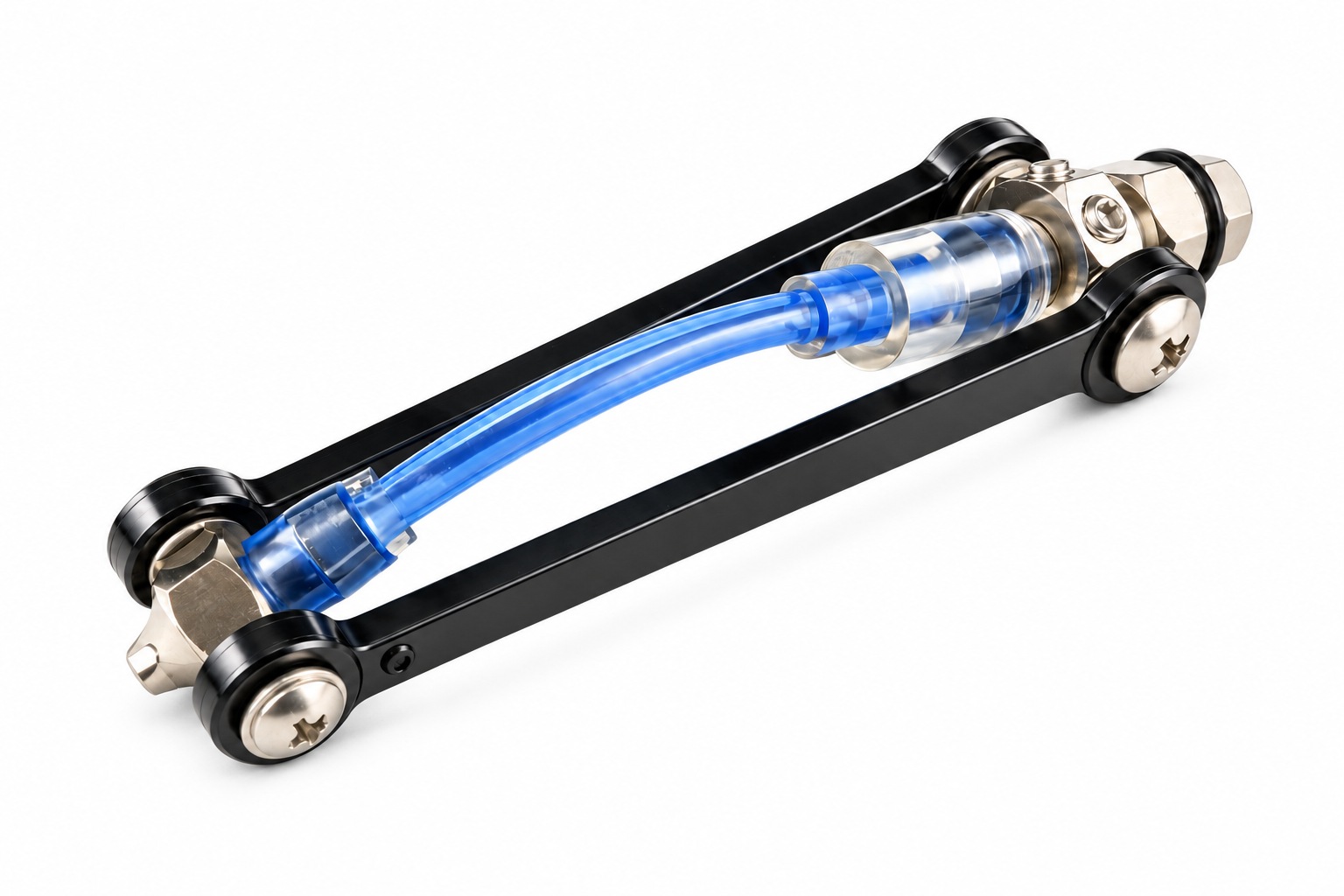
The nozzle oscillates from side to side to direct air over a wider area. It can reduce nozzle count and air use in suitable water- and dust-removal processes.
Can a Mechanical Swing Nozzle replace a flat nozzle? +
Replacement may be possible if the required coverage and finish can be achieved. Check pressure, distance, conveyor speed and cycle time, then compare water and dust removal on the actual workpiece.
Which nozzle was used to calculate the air savings? +
The report compares the MS-70 with a reference fixed wide-pattern nozzle. The one-to-one flow comparison showed approximately 72% less air. This is not a comparison with all other nozzles or intermittent pulsed-air systems. Actual savings depend on nozzle count and operating time.
Which saves more air: a rotating nozzle or intermittent pulsed air? +
The operating principle alone does not determine the answer. Intermittent systems introduce off periods; rotating nozzles move the jet to cover more area. Compare cycle time and total air use while achieving the same required finish on the same workpiece.
Tell us about your workpiece, contamination, supply pressure and existing nozzle. Demo-equipment loans are available within Japan only; for overseas applications, contact us to discuss product selection and evaluation options. When comparing systems, check:
1
Removal result
Whether the required water removal, dust removal or cleaning finish is achieved.
2
Cycle time
Time needed to reach the required finish.
3
Total air consumption
Air used for the complete task, including nozzle count and operating time.