Surface-Friendly Cleaning
Remove paint and deposits while taking care of valuable aircraft surfaces.
Pearl Harbor Aviation Museum
GA-REW air tools have been used in aircraft restoration at Pearl Harbor Aviation Museum. Discover how Japanese engineering supports the preservation of historic aircraft.
Project
GA-REW technology supports restoration at Pearl Harbor Aviation Museum, which preserves and exhibits historic aircraft from the Second World War.
This page presents the use of GA-REW air tools in aircraft restoration at Pearl Harbor Aviation Museum in Hawaii, USA. Photographs, videos and comments are reproduced with the museum's permission.
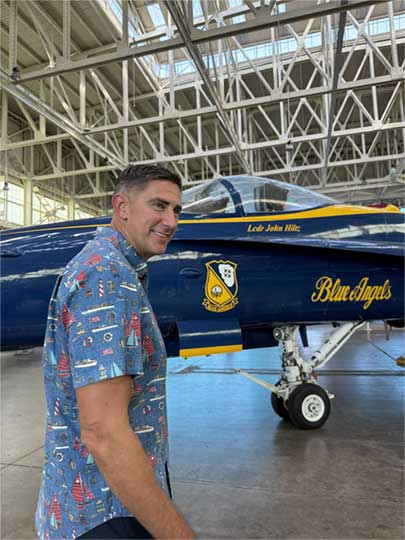
Aircraft conservation requires careful removal of dirt and deposits while protecting the underlying surfaces.
GA-REW cleaning and surface preparation tools support these delicate restoration tasks and help preserve historic aircraft.
This project illustrates how technology developed by a small Japanese manufacturer can contribute to the preservation of international aviation heritage.
Value
Historic aircraft restoration demands careful surface treatment and practical tools. The restoration team evaluated our technology in their work.
Remove paint and deposits while taking care of valuable aircraft surfaces.
Direct air into confined spaces and around complex shapes to help remove debris.
Brushing and air cleaning work together to loosen deposits and clear away debris.
Combined cleaning actions help improve workflow and cleaning quality during restoration.
Products
GA-REW cleaning and surface preparation tools used in aircraft restoration at Pearl Harbor Aviation Museum.
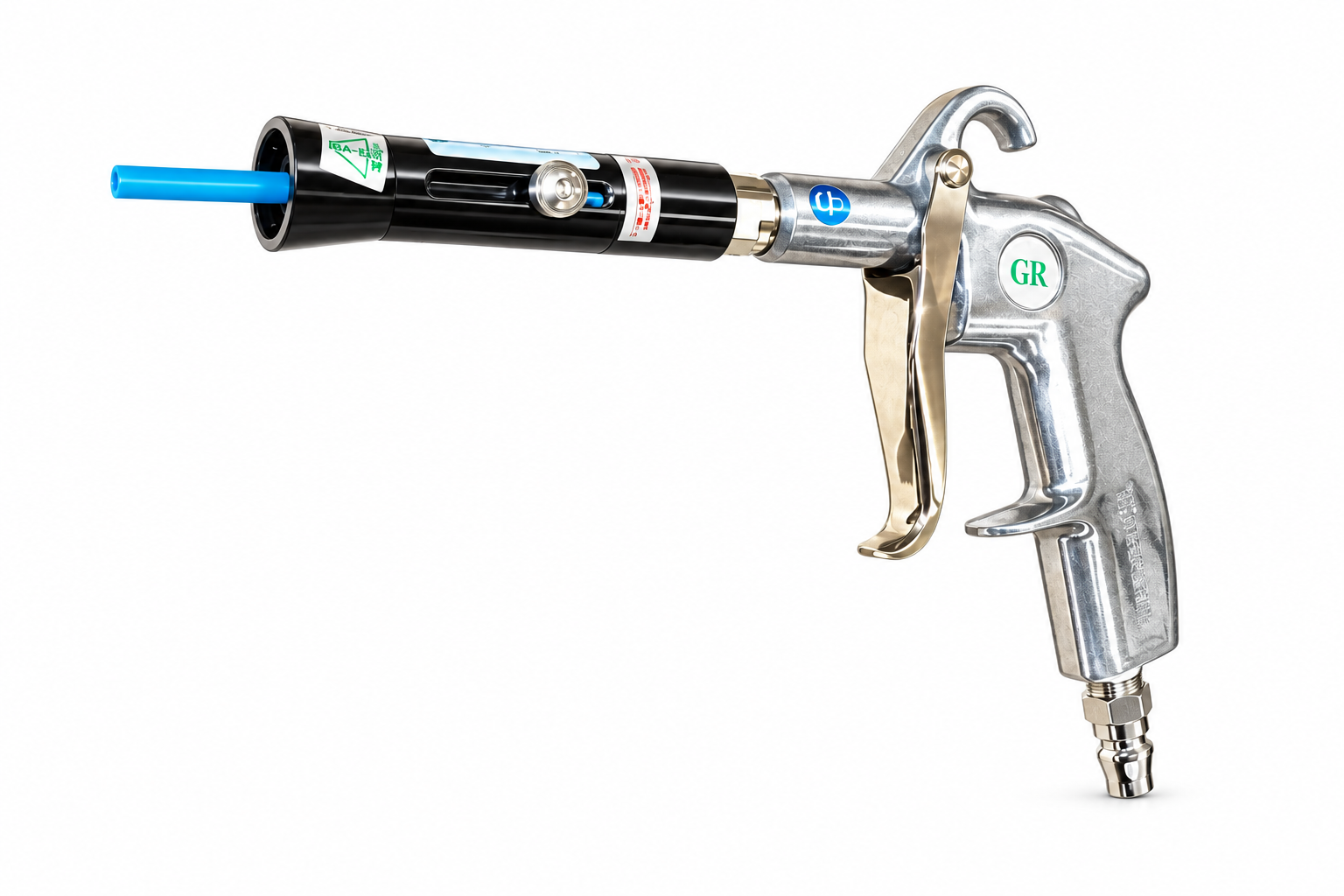
Adjustable Shock Gun
An air tool that uses GA-REW's pulsed-air technology to help remove deposits and loose paint while controlling the load on the workpiece.
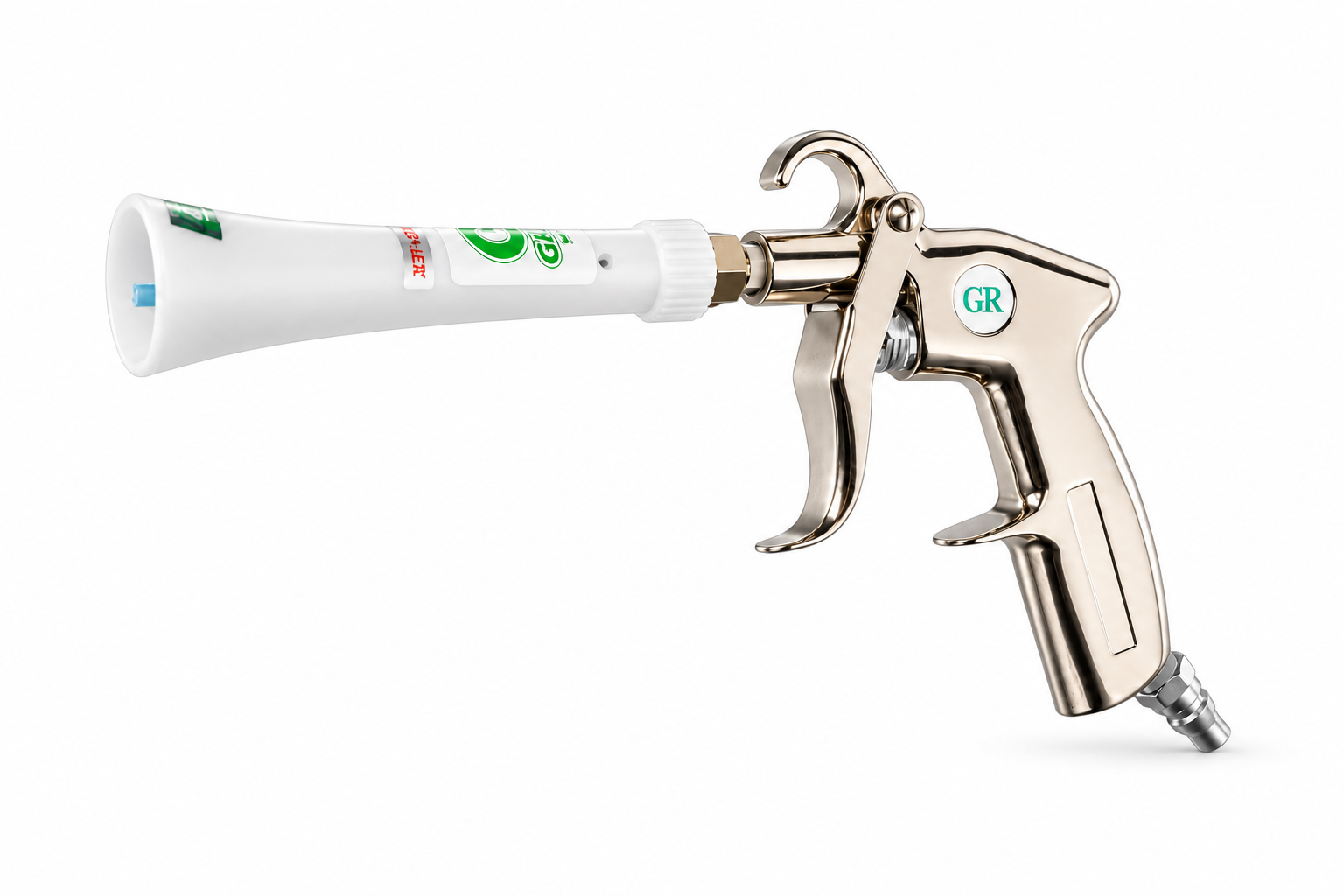
Air Blaster Mini
A compact air gun that delivers air into confined spaces and complex shapes to remove chips, dust and foreign matter.
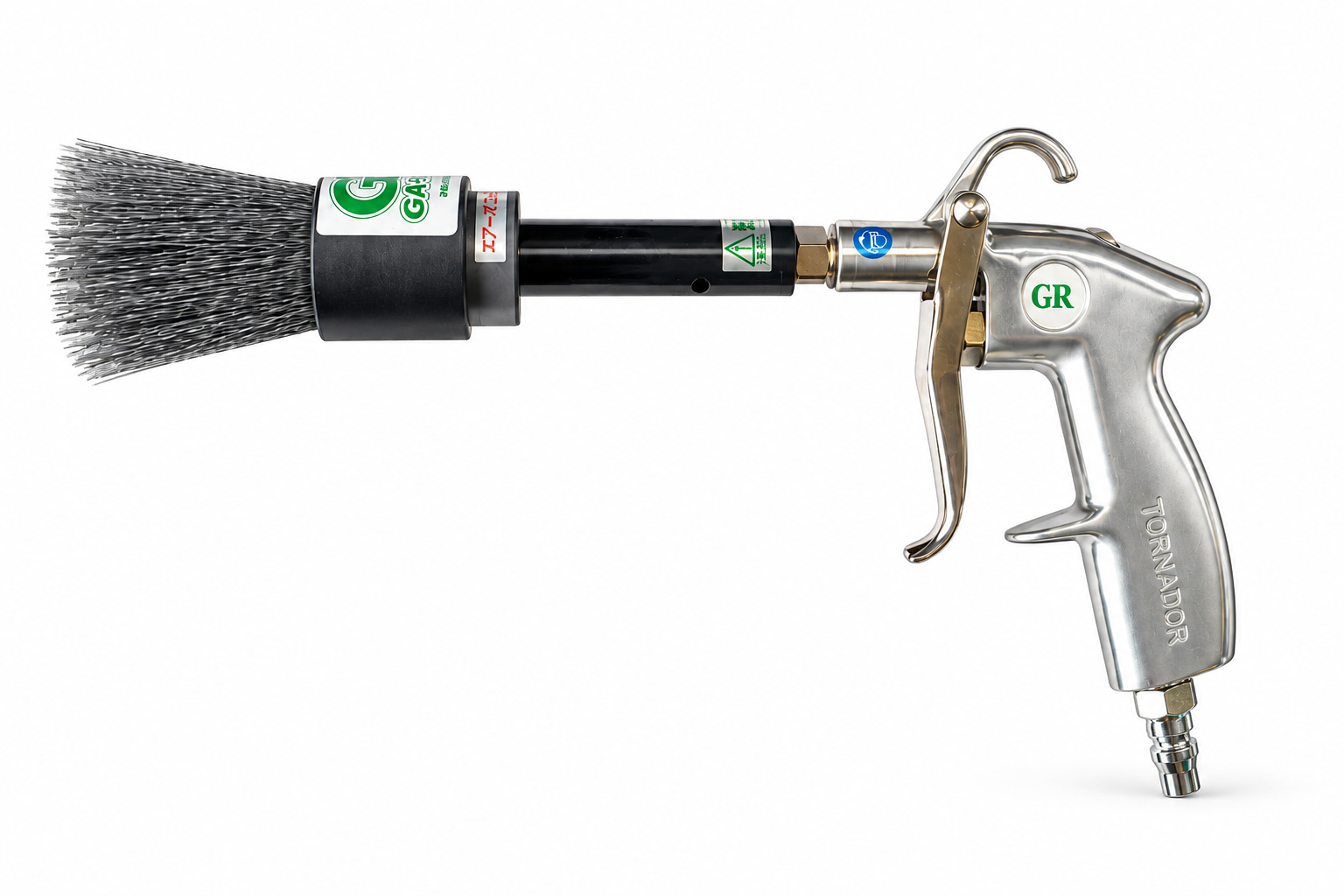
Deburring Brush Gun
A tool combining brushing and air cleaning, allowing operators to loosen deposits and clear away debris at the same time.
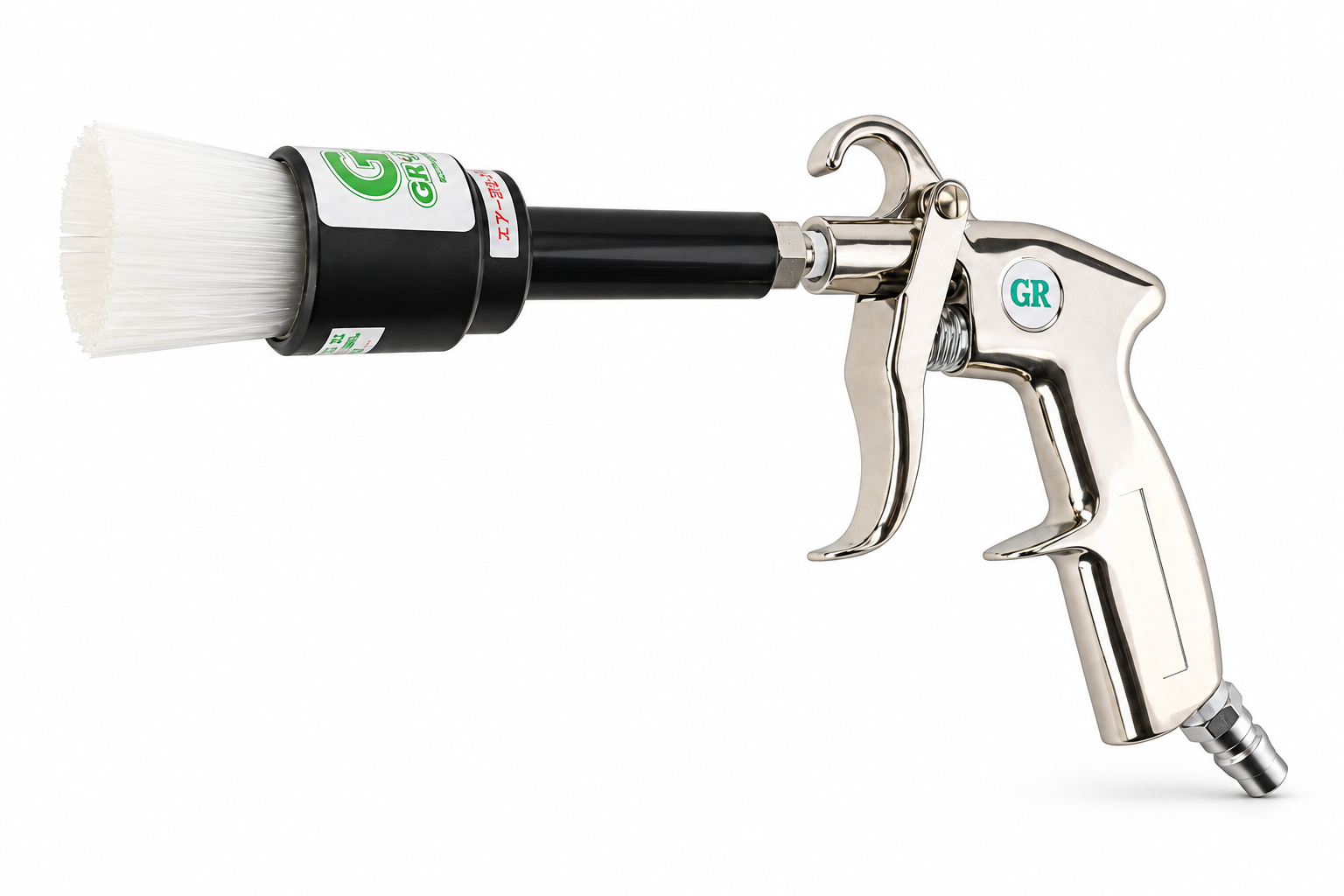
Precision Cleaning Brush Gun
A soft brush combined with air cleaning for delicate parts, complex shapes and confined areas. Select the brush and operating conditions to suit the surface and contamination.
Restoration Process
Explore the tasks in which the museum's restoration team used GA-REW tools.
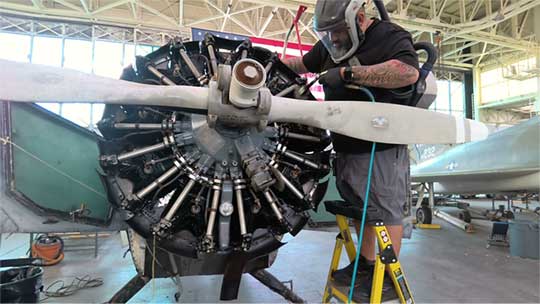
Deteriorated paint and deposits are removed before repainting, with care taken to protect the historic aircraft and prepare its surface for the next stage.
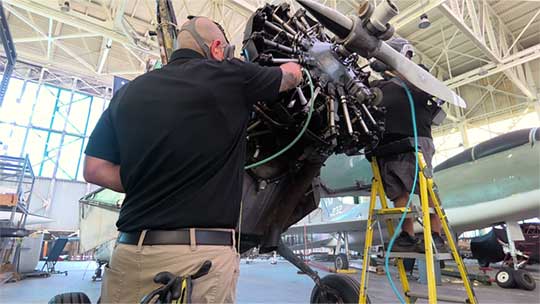
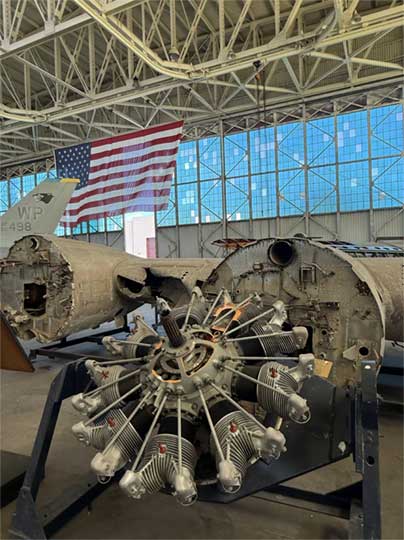
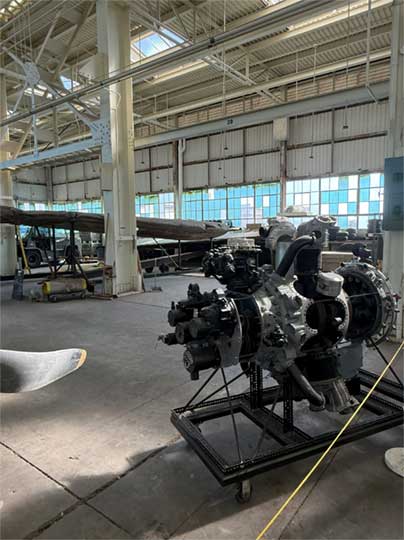
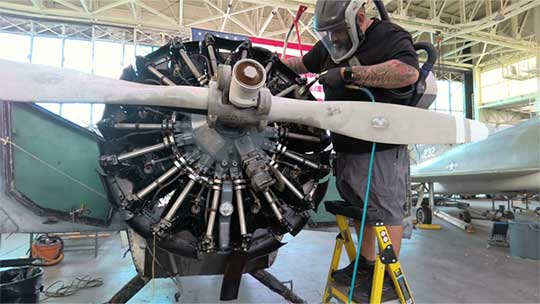
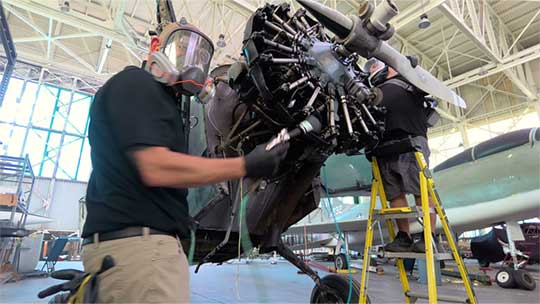
Brushing and air cleaning help remove deposits around engines and other complex structures, including confined areas.
Field Review
Original comments from the team at Pearl Harbor Aviation Museum following their evaluation of the tools.
Our current thinking is to use the blow guns before scrapers for peeling paint or other flaking materials to lessen the chance of scratching the surface. They are surprisingly powerful and the circular action would probably lift rather than push any loose paint free better than a straight stream of air.
I've used the brush gun on a few pieces to test out removing oxidized paint vs just wiping and have found quite a bit of success. With just water we were able to remove the oxidized paint layer without the streaks that often occur with just wiping with a rag.
We used the sonic cleaner and air gun while working on the L-13 aircraft, mainly around the engine. Overall, the air guns had good pressure. They worked well for removing debris, especially in hard-to-reach spots. Some areas around the engine were tight, but the pressure was strong enough to get in there and blow out buildup without much issue.
As for the sonic cleaner with the brush attachments, we had mixed results depending on the bristle type. The harder bristle brush worked really well. It helped remove some oxidation and grease pretty effectively. The softer brush didn’t perform as well for heavier buildup. It wasn’t really cutting through the tougher stuff, but we think it is still useful for lighter cleaning in areas such as the cockpit instrument panels.
One thing we did like was the overall concept of the tool. Having the brush and air working at the same time makes a difference. While you’re scrubbing, the air helps clear away debris at the same time, which makes the process more efficient.
Overall, we think it’s a solid tool. It performs better than a standard air gun in terms of pressure, and the brush + air combo is a big plus.
Media
The Nikkan Kogyo Shimbun featured the use of GA-REW tools at Pearl Harbor Aviation Museum.
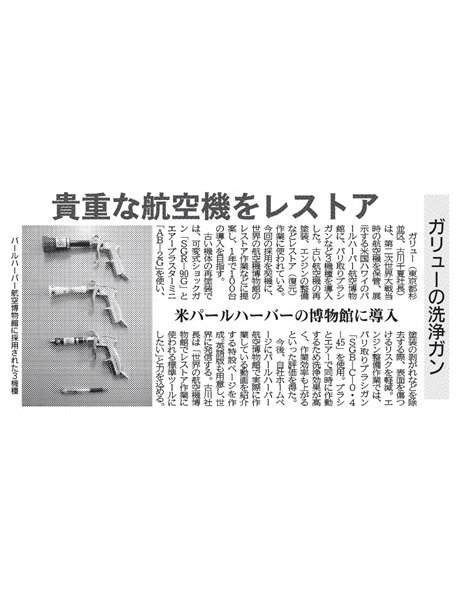
June 26, 2026
The Nikkan Kogyo Shimbun reported on the use of GA-REW cleaning and surface preparation equipment in aircraft restoration at Pearl Harbor Aviation Museum in the United States.
The article highlights cleaning and surface preparation technology for the care of historically significant aircraft.
Reproduced with permission from The Nikkan Kogyo Shimbun, Ltd. Article in Japanese.
Gallery
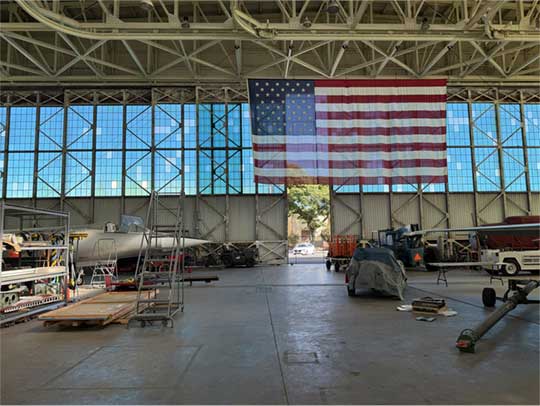
Photographs from the restoration project
Movie
Watch the tools in use during aircraft restoration.
Future
Building on this project, we aim to introduce GA-REW technology to more aviation museums and the defense and aerospace sectors.
We plan to introduce our products and technology to aviation museums and heritage preservation facilities, supporting the conservation and restoration of historic aircraft.
We aim to explore cleaning and surface preparation applications for the maintenance, conservation and restoration of defense equipment and historic exhibits.
We aim to expand applications in aircraft maintenance, MRO (maintenance, repair and overhaul) and aerospace manufacturing, where demanding quality requirements call for carefully selected cleaning processes.
Contact
Contact us for help with product selection, operating conditions or technical questions.
Contact us